

No items found.
Algorithm and Art: The immediate over the meaningful
I can’t remember how long Instagram has dominated my search for art and inspiration, but it seems like forever. Over the time that I have been an active doomscroller, I have noticed that we have gone from seeing each other’s cups of coffee to only hearing about our friends when they share a meme. And now posts that come from people I actually know don’t seem to appear on my feed at all.
So it makes sense that people feel that if they do not have their stuff on Instagram, they in effect do not exist. This is very relevant for artists and creative producers like myself. What started as a kind of peephole into other people’s studio lives has become endless scrolling through artist reels designed specifically to stop the scroll.
I think this has cultivated a trend: playing to the audience, where artists are creating for the algorithm, that split-second opportunity they have to deploy a lethal dose of dopamine. In my opinion, this has led to the rise of work such as the trend of showing an immediate likeness that is proliferated on IG. The instant realness is like a bolt of lightning from the gods. Wow. Inevitably, this trend has ended up in actual physical galleries.
Kyle Chayka notes in his 2024 book Filterworld, frictionlessness is always the ideal. As soon as you slow down, you might reconsider what you are clicking on. Friction allows people to think about their actions. By removing the friction of human choice, the algorithm has prioritised the immediate over the meaningful. We have traded the grit of the studio for the gloss of the feed.
Despite this, I recognise that Instagram remains the most effective place to view and share work, simply because that is where the people are. It is a numbers game. My own feed has recently become more varied and interesting, proving that the platform is still a vital utility for a practitioner. The trick is to go where the audience is to show your work without letting the algorithm write the brief for you.
And now for something completely different. Enter AI and the protagonists, Midjourney and Stable Diffusion. Now that an instantly recognisable and photorealistic charcoal drawing is achieved in seconds, the gloss begins to tarnish.
It appears to me that AI is having the effect of making real, gritty, handmade art more valuable and that the new luxury is made by hand. You can see this in recent art market reports. The 2026 forecast suggests that collectors are rejecting AI perfection in favour of visible humanity and intentional imperfection. They want to see the backstory, the friction, the process, the evidence of humanity. This should give us all hope.
As Seth Godin reminds us,
“Art is a human act, a generous contribution, something that might not work. You can be perfect or you can make art.”
That is not to say that I do not respect or appreciate photorealistic art. I do believe that, like most genres, the best of it will remain relevant and compelling, rising above the two-second dopamine rush to leave a lasting impression and a meaningful statement of intent.
Generative AI is frictionless. It is excellent at interpolation, averaging out what things look like, but it is currently quite poor at expressing what things mean without resorting to cliché. It also represents a purely functional proposition. If AI is great at playing chess, do we want to watch two AIs play chess together? Do we want to look at art that is devoid of human connection?
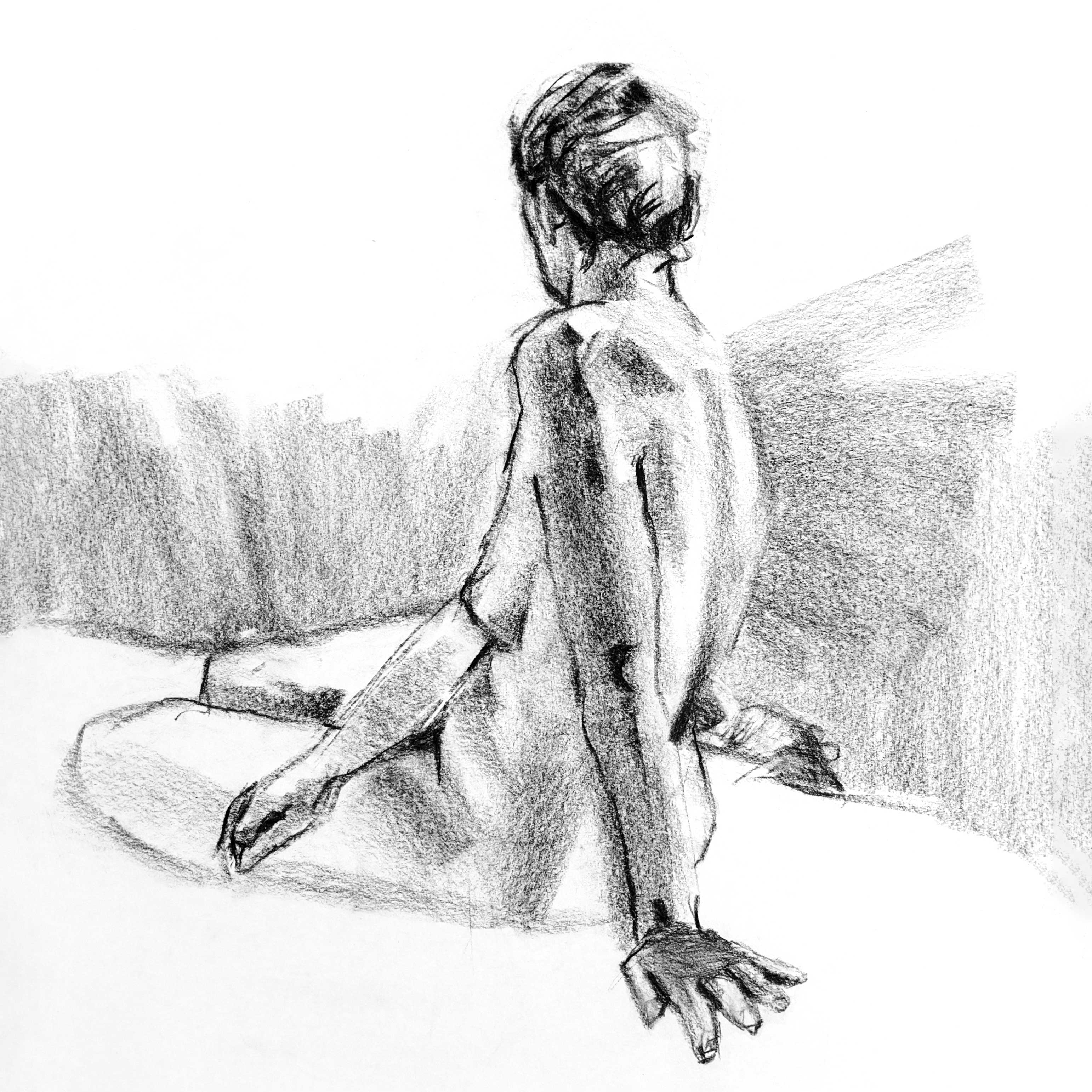
I am currently on a wild and very analogue drawing spree, experimenting to find a graphic language that feels like my own. This involves intentionally making mistakes in a bid to wear down my own urge to perform. I am finding that by embracing ugliness and chaos I learn more about my mark making and produce more surprising and expressive results, which is not easy.
Sources
- Chayka, K. (2024). Filterworld: How Algorithms Flattened Culture.
- Godin, S. (2015). The Icarus Deception: How High Will You Fly?
- Art Market Research (2026). The Rise of the Handmade: Post-AI Forecasts.
Subscribe by clicking below to receive new Substack articles when they are posted.
