/about
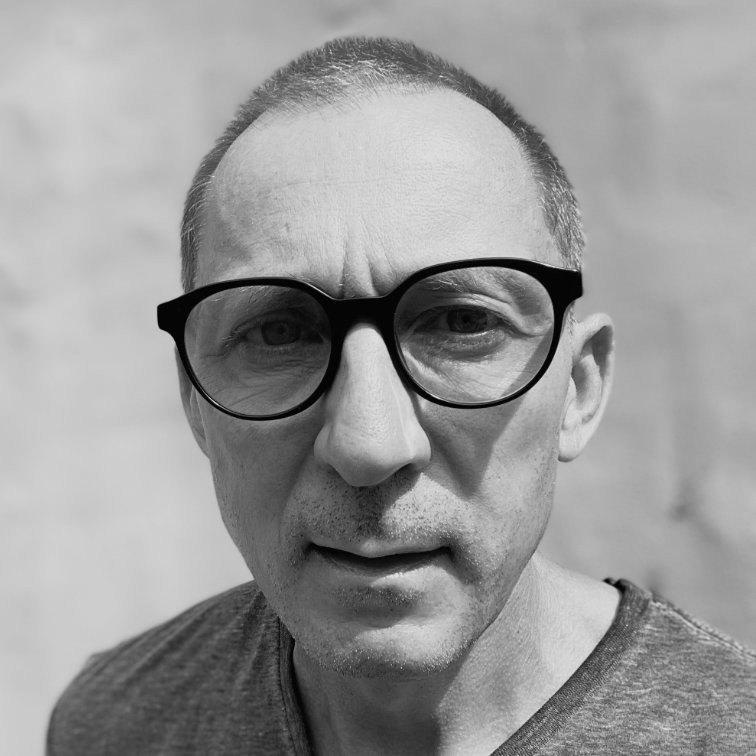
michael viljoen: Who I Am and Why I create
Drawing has always been a thing in my life. Since as far back as I can remember, I was drawing, by myself in some sandy corner, or using a stick to draw on wet beach sand. As a child, I made sculptures out of clay, firing them in bonfires during camping trips on the farm in Cato Ridge, or carving futuristic motorbikes out of scrap wood.
In high school, my art was often wild and frequently caused a stir on the school bus, and not just because the paint was still wet. “What is it?” they would ask, staring at an abstract canvas, all black and ominous. I would tell them: “It is of our beach holiday.” Even then, I knew that a painting perfectly captured the total reality of the moment I was in while creating it, everything going on in my life, in my mind, and within the subject. I still feel this way.
At the final moment before enrolling in a university law degree, a sudden realisation that the path lacked the creativity I craved pulled me back. I chose graphic design school instead. But after decades of a life spent in front of a digital screen, I have returned to time behind the easel. In fact, I use the exact same beautiful wooden easel I used in the 1980s. I have dragged its heavy frame through countless houses over the years; now, it sits in my Cape Town studio, serving me still.
For me, there was always a quiet emptiness to my work as a commercial designer, what Viktor Frankl termed existential frustration. It was not a dramatic, sudden crisis, but rather a slow, daily erosion of self. It is the experience of waking up one day to realise you have spent decades building someone else’s version of your life.
When we set out on a creative path, we are driven by an internal spark. David Bowie captured this truth perfectly when he noted:
“Never play to the gallery. Always remember that the reason you initially started working is that there was something inside yourself that you felt that if you could manifest in some way, you would understand more about yourself and how you coexist with the rest of society... I think it is terribly dangerous for an artist to fulfill other people’s expectations; they generally produce their worst work when they do that.”
Bowie argued that being an artist requires a degree of social dysfunctionalism, a deep, perhaps irrational, urge to create. For a long time, I kept my corporate design work and my true love of art strictly separated, secretly hesitant to fully claim my inner calling. But the search for meaning eventually catches up with you.
Careers and lives are not straight lines. They are loud, non-linear, and full of false starts, but as Frankl wrote, suffering ceases to be suffering the moment it finds meaning.
In this current practice, the subject is a vehicle for my expression. My drawings exist as literal time capsules for the moment, encapsulating everything I feel about the subject, the internal dialogue, emotions, and the reality of the space.
The work is not about conveying an objective, photographic representation of what I see. It is an expression of the experience of the moment.
The magic happens when I surrender to the physical process and allow the expression to find me. By peeling back what doesn’t fit, I am exploring my inner life through the friction and poetry of urban spaces, the raw gesture of the charcoal marks, and the unhurried flow of the moment.
